



RTS Visits Savremena: Artificial Intelligence in Education Through the Eyes of a Robotics Teacher
Sofija Radivojevic / / Blog / November 13, 2026
RTS Visits Savremena: Artificial Intelligence in Education Through the Eyes of a Robotics Teacher
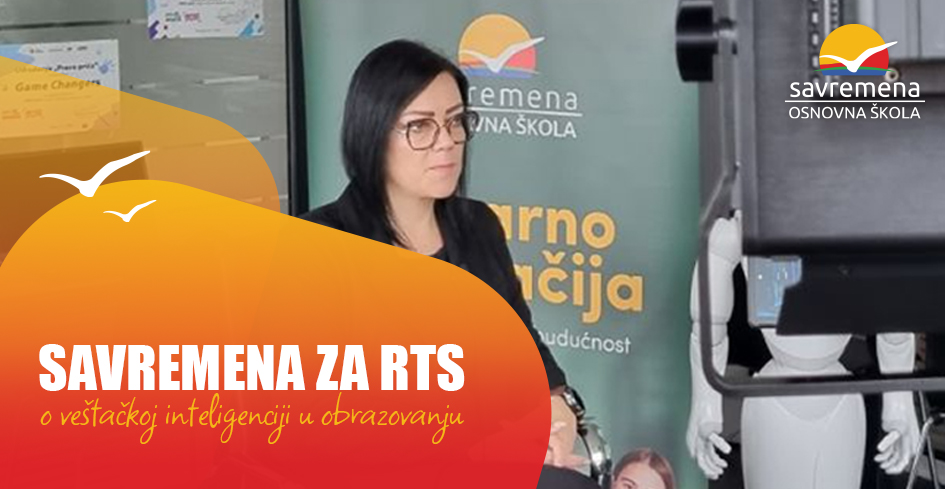
Robotics teacher Maja Babić spoke to RTS about artificial intelligence in education and the opportunities modern technologies offer pupils.
How is artificial intelligence changing the way children learn, and why is it important to introduce them to new technologies during their primary education? These questions were at the heart of a visit by Radio Television of Serbia (RTS) to Savremena Primary School, where robotics teacher Maja Babić was interviewed about the role of artificial intelligence in education.
The visit provided an opportunity to highlight a subject that is becoming increasingly relevant to pupils, parents and teachers alike. Artificial intelligence is already part of everyday life, and its application in education offers exciting opportunities to make learning more engaging, creative and effective.
At Savremena Primary School, technology is not simply an addition to lessons. It is part of a learning environment where pupils explore, ask questions and acquire knowledge through practical activities. Robotics, digital tools and an introduction to the principles of artificial intelligence help children develop skills that will be increasingly valuable in the future.
The interview with Maja Babić also highlighted the importance of responsible and thoughtful technology use, alongside the essential role teachers play in guiding pupils. After all, the aim is not for technology to think on behalf of children, but to help them think independently, explore new ideas and discover solutions for themselves.

Artificial Intelligence as a Tool for Learning and Creativity
Artificial intelligence is becoming an increasingly important part of education, but its real value emerges when it is used to encourage curiosity, creativity and independent thinking. This approach is central to learning at Savremena Primary School, where traditional knowledge is combined with the opportunities offered by modern technology.
Through robotics lessons and activities involving digital tools, pupils discover technology from a different perspective. Rather than simply consuming digital content, they learn how technology works, how it can be used to solve problems and how it can help turn their ideas into practical solutions.
It is particularly important for children to develop critical thinking skills from an early age. Artificial intelligence can be a useful learning assistant, but pupils must also understand that its answers are not always accurate. Learning to question, verify and independently assess information is therefore an essential part of digital education.
This is where teachers play an irreplaceable role. They guide children towards responsible technology use, encourage meaningful questions and help pupils build confidence in their own abilities.
Combining expert teaching with modern educational opportunities is one of the defining features of Savremena’s approach. Pupils do not simply memorise information; they learn to apply it, make connections and use their knowledge in everyday situations.
In this way, digital skills become a natural part of their education, developing alongside creativity, collaboration and independent problem-solving. Technology serves as a valuable resource that supports learning while allowing children to remain active, curious and engaged participants in the classroom.
Preparing Pupils for a World Shaped by New Technologies
The visit by RTS to Savremena Primary School once again drew attention to the importance of discussing the future of education and the role artificial intelligence will play in it.
As technology continues to develop, one of the key responsibilities of schools is to help children understand it and use it appropriately. This involves far more than becoming familiar with digital tools. It means developing curiosity, logical reasoning, creativity and the confidence to explore new possibilities independently.
At Savremena Primary School, pupils develop these abilities through robotics, practical tasks and innovative teaching methods. Technology allows them to experience learning as a process of discovery, experimentation and creation, while teachers encourage them to take an active role in their own education.
Maja Babić’s interview with RTS was a valuable opportunity to bring these important topics beyond the classroom and highlight the significance of a modern approach to teaching and learning.
Ultimately, the future of education is not simply about introducing new technologies. It is about teaching children how to think, explore and apply their knowledge with confidence and responsibility.
This is why Savremena continues to create an environment where knowledge, creativity and technology work together, helping pupils develop the skills and understanding they need for the world ahead.