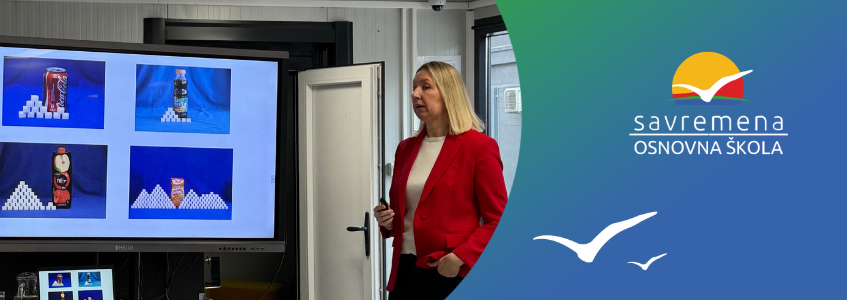
Ivana didn’t just talk about theory. She gave examples. Concrete. Practical. Achievable.
Breakfast? Not just cereal with milk. But something that gives energy for a longer time – eggs, whole grain bread, fruit, yogurt. Something that won’t cause a sugar crash after an hour and the need to eat again.
Lunch? Not just fast food or snacks. But a combination of protein, carbohydrates, and vegetables. Chicken with rice and salad. Pasta with tomato and cheese. Meals that are tasty, but also nutritionally balanced.
Dinner? Don’t skip it. Don’t eat too late. And don’t turn it into the biggest meal of the day just because it’s the only moment when the family sits together.
Children asked questions. “What if I don’t like vegetables?” “Why am I always cold after lunch?” “Is it really bad to eat sweets?” And Ivana answered. Without moralizing. Without exaggeration. With understanding.
Because the goal wasn’t for children to stop eating what they love. The goal was for them to understand how food works. And to make decisions consciously – not because someone says “you have to”, but because they understand why.
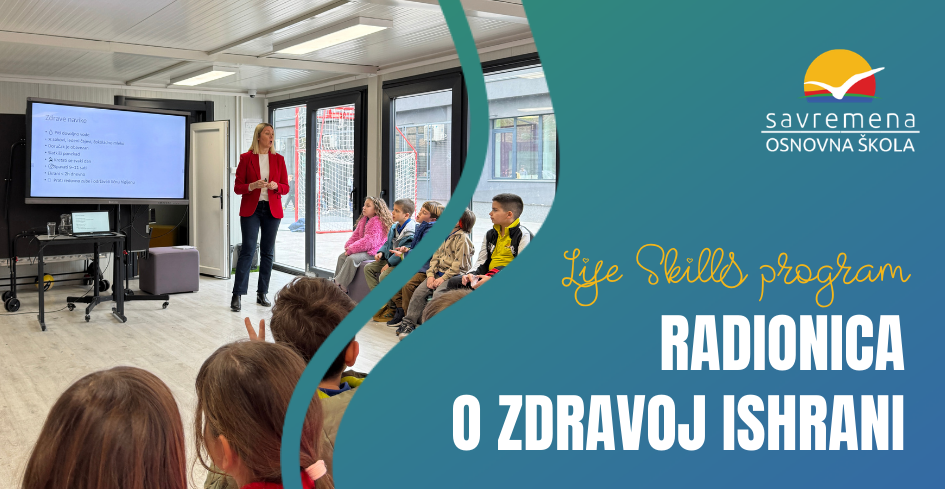
The Life Skills program at Savremena isn’t theory – it’s practice. Every week, students work on skills that school usually doesn’t teach: how to make a decision, how to think critically, how to manage emotions, how to solve problems. And nutrition is part of that program – because healthy habits are learned when you’re a child, not when they become a problem.
Children grow up in a world where fast food is easily accessible, where snacks are everywhere around them, where time is limited and where parents often don’t have space to explain what “eating healthy” means. And then a workshop like this – with a nutritionist who knows how to talk to children – becomes a lesson that stays.
Ivana didn’t give a lecture. She led a conversation. Interactive. Adapted to children. Fun. And children participated – not because they had to, but because they were interested.
This wasn’t a lesson that ends when the workshop ends. This is information that children carry with them – to school, home, to practice, on the road. And when they next choose what to eat – they’ll be more aware. Maybe they won’t always choose the healthiest option. But they’ll know what they’re choosing. And that’s enough.
Because Life Skills isn’t about perfection. It’s about knowledge. And decisions made consciously.