





Inspired by the poem “The Spider’s Work” – Learning through Movement and Play
Violeta Nincetovic / / Blog / April 8, 2026
Learning through Movement and Play
Inspired by the poem “The Spider’s Work”
Learning doesn’t always have to be tied to desks and classrooms—sometimes, all it takes is a bit of imagination, inspiration, and a sunny day to transform a lesson into an unforgettable experience. That is exactly what happened during our class inspired by Desanka Maksimović’s poem “The Spider’s Work,” which students had previously explored in their Serbian language lesson. This time, the verses didn’t remain on paper—they came to life through movement, play, and collaborative creation.
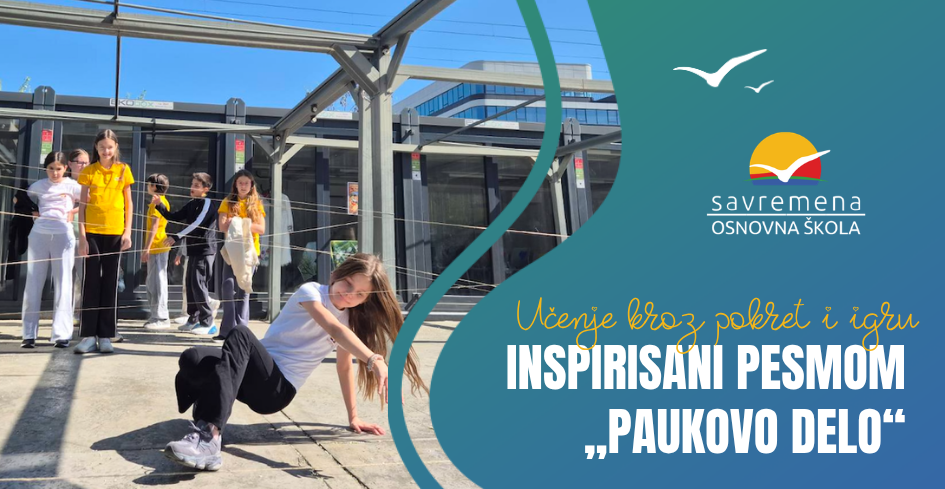
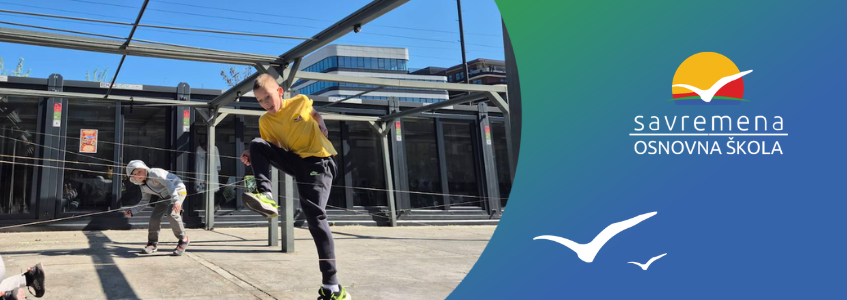
Guided by the poem’s motifs, students were challenged to design and build their own “spider’s web” in the school yard. Using ropes, they carefully stretched lines between pillars, creating an engaging and dynamic obstacle course. Even during the process itself, their creativity, precision, and enthusiasm were evident. The web was not just a physical structure—it became a bridge between literature and real-life experience, between imagination and action.
Once the web was ready, the most exciting part began—moving through it. The rule was simple, yet challenging: pass through the web without touching the ropes. Students planned their movements carefully, thought ahead, and supported one another, showing how important life skills can develop through play. Learning that day was active, dynamic, and filled with laughter, but also focus and determination.
When Literature Becomes Experience
This approach allows children to experience learning not just as information to memorize, but as something they can truly understand and apply. The poem “The Spider’s Work” gained new meaning as students, like spiders themselves, had to be patient, precise, and resourceful. Each movement through the web became a personal interpretation of the poem—authentic and creative.
During the activity, students developed coordination, balance, spatial awareness, teamwork, and communication. They supported and encouraged each other, celebrating every successful attempt. In this way, they learned not only how to overcome obstacles but also how to collaborate and be part of a team.
The true value of this lesson lies in connecting different subjects. Literature, physical education, and creative expression merged into a single experience that supports holistic child development. Through play, students naturally discovered themes such as persistence, effort, and skill—core messages of the poem.
Learning That Lasts
The most valuable outcome of such activities is how deeply they stay with students. Instead of remembering only the words of the poem, they recall the feelings, the movement, the challenge, and the shared success. These are the kinds of lessons that last, because they are connected to personal experience and emotion.
Through this approach, students build confidence and trust in their own abilities. Every successfully crossed section of the web was a small personal victory and proof that persistence leads to success. At the same time, they learned that mistakes are not obstacles, but opportunities to grow.
In this way, school becomes a place where knowledge is not just delivered, but created together. Through movement, play, and creativity, students become active participants in their own learning journey. We look forward to many more opportunities to make learning just as inspiring, dynamic, and meaningful—because these are the moments that shape a lifelong love of learning.