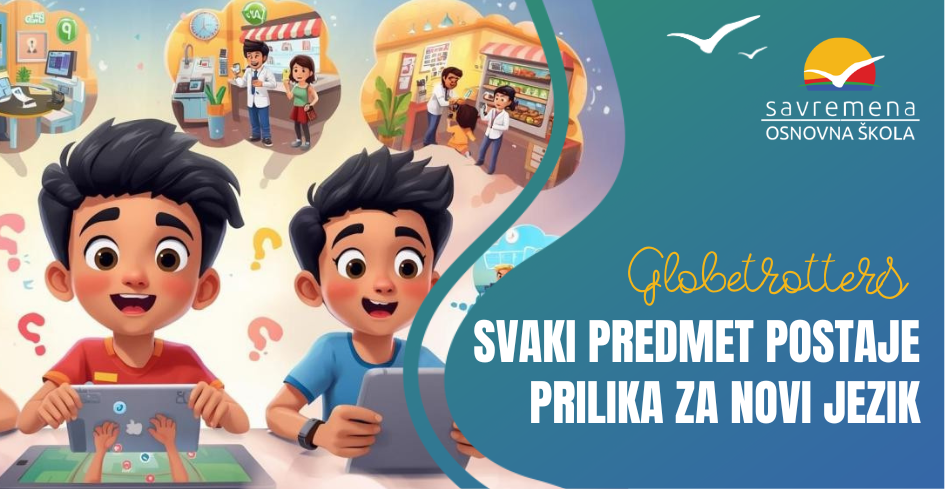
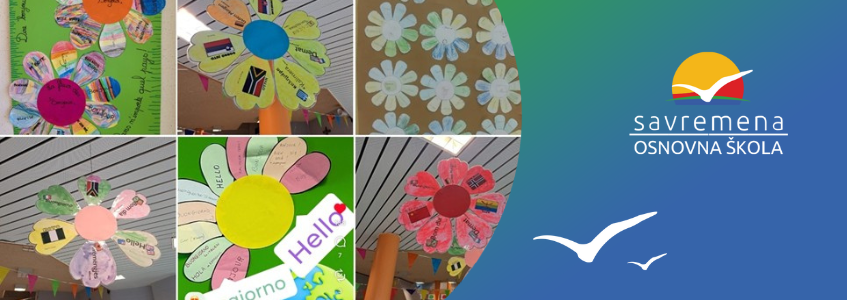
Unlike traditional language instruction, language awareness is not a separate subject, but an integrated part of every school discipline — mathematics, art, science, geography, history, civic education and more. Every lesson becomes an opportunity to notice linguistic patterns, discover cultural differences or explore how people communicate across the world.
Through this approach, students at Savremena:
- compare words and structures across different languages
- discover how culture shapes communication
- connect science, art and language
- learn to see diversity as a strength rather than a barrier
Following Globetrotters methodology, teachers create a classroom environment where students freely ask questions, offer ideas, share languages spoken at home and actively participate in collaborative discovery. This model embraces children’s natural curiosity and spontaneity, making learning intuitive, meaningful and memorable.Although implementing this approach may seem demanding, especially with younger students, success lies in openness and cooperation. In the European language awareness model, teachers are not just instructors, but:
- partners,
- guides,
- co-explorers of languages and cultures alongside their students.
Many educators across Europe express concern about lacking formal training, but the Globetrotters project provides a solid foundation — offering structured materials, practical examples and clear guidance that support teachers at every step. At Savremena, this model proved that — with good methodology and teamwork — even the youngest learners can enjoy complex linguistic and cultural concepts in a natural and engaging way.
Throughout the project, students participated in a variety of activities designed to connect language with everyday life, creativity and culture. Some of these included:
- Cultural projects exploring a country through landmarks, animals, music and language
- Visits from artists or writers presenting their work and language
- Storytelling and reading workshops with native speakers
- Multilingual classroom moments where parents or students share their mother tongue
- Culinary workshops introducing cultures through traditional dishes
- Songs, rhythms and dances from different parts of the world
- Calligraphy workshops exploring different writing systems
- Language games such as memory cards, puzzles, board games, flashcards and colouring tasks
- Multilingual Kamishibai theatre — creating multilingual stories as part of an international Erasmus+ competition
These activities allowed every child — regardless of linguistic background — to engage with languages in a hands-on, joyful and accessible way, showing that meaningful learning happens when children feel free, supported and inspired.