

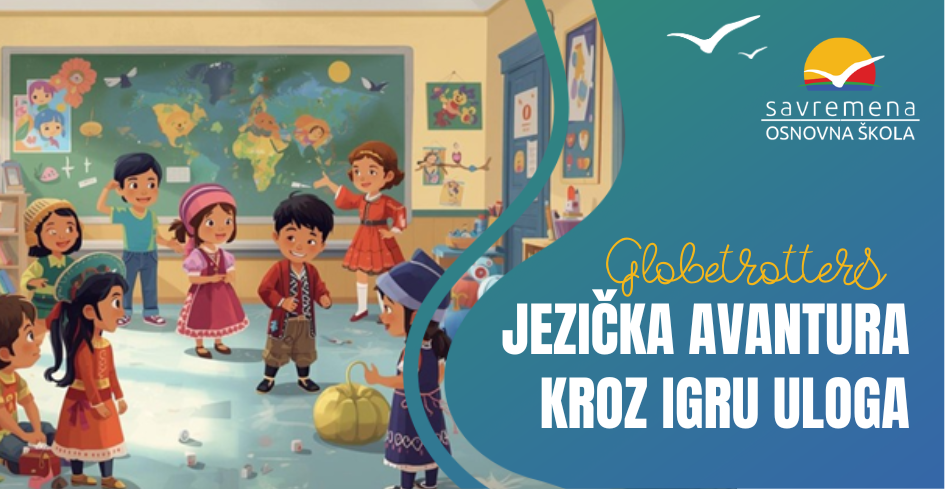
Globetrotters – A Language Adventure Through Role-Play

/ / Blog, Erasmus+ / November 5, 2025

Globetrotters - A Language Adventure Through Role-Play

Partnership with the European project Globetrotters

How Savremena students explore the world of language “in someone else’s shoes” As part of the international Globetrotters project, students of Savremena Primary School embarked on a new chapter of language learning — through role-play, creative simulations and real-life scenarios. This method, inspired by modern pedagogical practices and the article “In Their Shoes: Role-Play in Language Learning,” allows students not to memorise a language, but to live it, feel it and use it. Through various activities, students explored cultures, ways of thinking and communication styles from around the world, developing empathy, curiosity and confidence in speaking.Savremena’s classrooms transformed into small stages where students stepped into different roles: tourists, shopkeepers, travellers, doctors, locals from foreign countries… Through these real-life scenarios, students practised vocabulary and grammar, but more importantly — they learned to communicate spontaneously, naturally and with an understanding of context.

This Globetrotters approach showed how role-play strengthens linguistic confidence. Students spoke without fear of making mistakes, improvised dialogues and began to think in the language they were learning. At the same time, they developed intercultural awareness — understanding why people greet differently in other cultures, how customs work and why it matters to see the world from another person’s perspective.
This experiential approach gave them a sense of freedom, but also pride — realising they can speak the language they are learning.

Mini worlds inside the classroom — simulations of everyday life

With the guidance of their teachers, students created small “themed worlds” inside the classroom: markets, airports, hotel receptions, restaurants, travel agencies and metro stations. In these spaces, language had a real purpose — ordering food, asking for prices, booking a trip, introducing oneself or solving a problem. They used props, cards, toys, maps and even digital tools to make each scene feel authentic.
Through this, students developed:

  • active listening
  • confidence in communication
  • flexibility and problem-solving
  • teamwork and cooperation

This style of teaching transformed learning into play — and play into a deeply meaningful educational experience. That is exactly why role-play is a core element of the Globetrotters approach: children learn best when they feel free, curious and fully engaged.

Language as a tool for understanding people — values that remain

The most important message of this project goes beyond language skills — it’s about understanding and empathy. Savremena’s students discovered that every language is a bridge connecting people and cultures. By stepping into different characters, they practised recognising emotions, perspectives and experiences that differ from their own. Through discussions after each simulation, students reflected on:

  • how they felt in different roles
  • what was easy and what challenged them
  • how culture affects communication
  • why respecting differences matters

This reflective work strengthened their critical thinking and emotional intelligence. Language was no longer a list of words — it became a way to connect with the world. The Globetrotters project at Savremena once again showed that the true power of learning lies in experience, play and understanding others. Students walked away not only with new vocabulary, but with a deeper insight into how people think, feel and communicate across cultures — a skill that holds lasting value. 


Viber WhatsApp