


We learn through tradition – Learning about a russian holiday

/ / Blog / February 24, 2026

We learn through tradition

Learning about a russian holiday

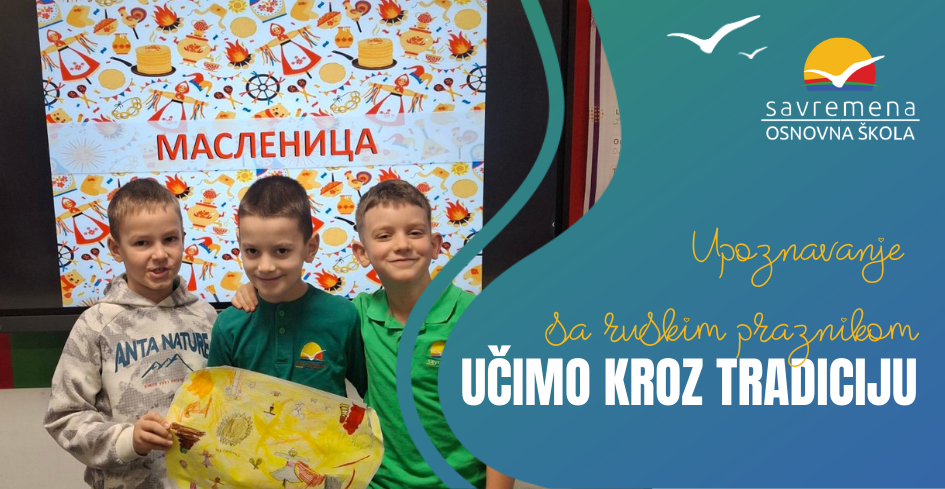
Fedor and Jarik stood before their classmates with a presentation. Topic: Maslenica – a Russian national holiday celebrating the arrival of spring. They weren’t nervous. They didn’t read from paper. They talked about a tradition they know, a holiday they celebrate with their families, what Maslenica means to the Russian people.

They explained that Maslenica is celebrated for a week, that it’s a period when winter is seen off and spring is welcomed. That during this week, pancakes are made – because they’re round, yellow, warm, like the sun being called to return. That fires are lit, celebrations organized, people spend time together.

The other children listened. Asked questions. Learned. And they didn’t need a textbook to understand what Maslenica is. They needed Fedor and Jarik – two children who know how it feels to make pancakes with your own hands because it’s part of a tradition your family nurtures. This wasn’t a classic lesson about Russian culture. This was a lesson where children learn from children. And that’s the most important lesson – that culture isn’t something you read in books. Culture is something you live, share, pass on.
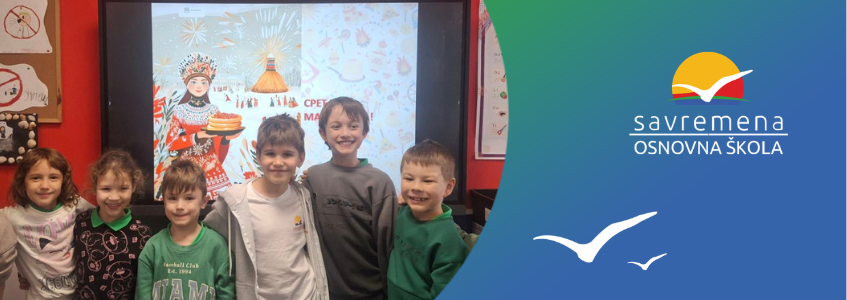
Questions about tradition

After the presentation, a quiz was organized. Questions about Maslenica, tradition, symbols. Children competed, laughed, learned. And then they took markers and paper – and started drawing pancakes.

Yellow, round, with motifs of Russian folk tradition. Flowers, ornaments, symbols that carry meaning. Each pancake was different. Each carried part of the imagination of the child drawing it. But together they were all the same – a symbol of spring, sun, warmth that’s coming.

And when all the pancakes were finished, they were hung on the wall. The classroom became brighter. Not because more light came in – but because it became a space where something shared is celebrated. The arrival of spring. Joy that knows no borders. Tradition that’s shared. Children from Serbia and children from Russia celebrated together that day. They didn’t just celebrate Maslenica. They celebrated being able to share cultures, traditions, stories. And through that, become closer.

Why is this important?

Savremena has children from different countries. Different cultures, different traditions, different holidays. And instead of being a barrier – it becomes an opportunity.

An opportunity for children to learn that the world isn’t monolithic. That there are different ways to celebrate, to believe, to live. And that doesn’t mean we’re divided – it means we have more stories we can share. When Fedor and Jarik talk about Maslenica, other children don’t just learn about Russian tradition. They learn that their classmates have stories worth listening to. They learn that culture isn’t something foreign – it’s something someone they know and care about lives every day. And next time, when another child shares their tradition – everyone will know how it’s done. Because they’ve already seen it. Already learned. Already understood that diversity isn’t a problem – it’s richness.

The classroom is now illuminated by the sun of the Maslenica holiday. But more than that – it’s illuminated by the idea that we can celebrate together. That we can learn from each other. And when we do that – we all become richer. Fedor and Jarik brought Maslenica to school. But what they actually brought is a lesson – that culture connects, doesn’t divide. And when children learn from each other – they learn best.


Viber WhatsApp