

Learning knows no boundaries between subjects. In one of the recent classes, students combined Serbian language and art into one complete experience – through four seasons, famous painters, and their own creativity. The result? New works of art, both visual and literary, created through collaborative work, inspiration, and knowledge that connects and complements each other. Before they picked up brushes and paints, students reviewed their knowledge of expressive culture and essay writing. They discussed how feelings and impressions can be conveyed through words, how to describe nature, colors, light, and the atmosphere that each season brings. They learned how to choose the right words, how to build sentences that paint a picture for the reader of what they see. And then they moved forward – toward the light of art that tells that same story through colors, lines, and forms. Students had the opportunity to virtually visit the National Museum and discover works by great artists who have captured the beauty of the seasons on their canvases for centuries. They talked about how Impressionists, like Monet, painted light and changes in nature, how Van Gogh experienced colors and movement, and how artists used different techniques to portray spring flowers, summer sun, autumn leaves, or winter peace. Each painting carried a story, and each story sparked imagination.
Virtual walk through art – Correlation that connects subjects
Violeta Nincetovic / / Blog / February 6, 2026
Virtual walk through art
Correlation that connects subjects
From Colors to Words and Back
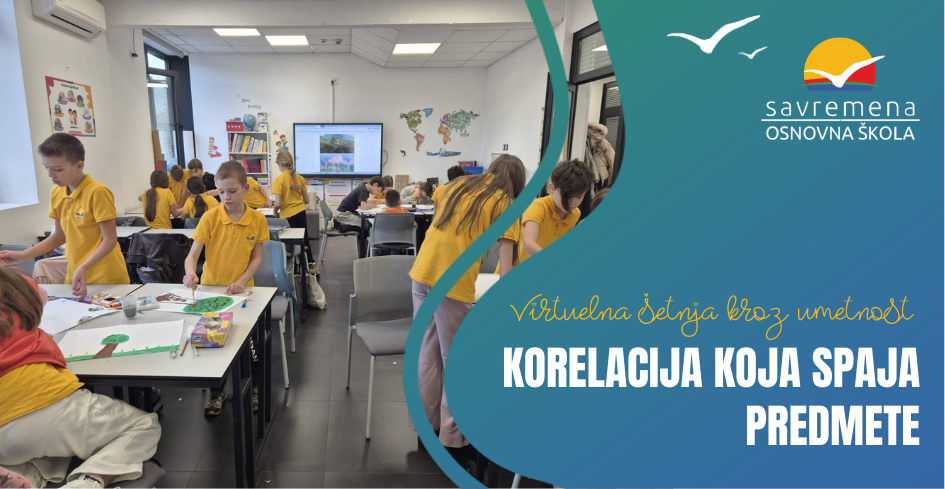
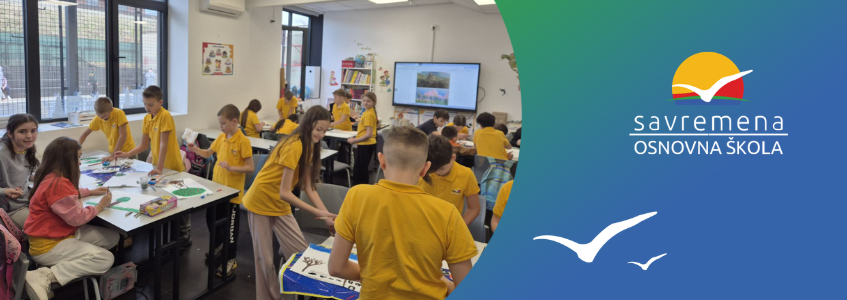
Inspired by what they saw, students began creating. Divided into groups, each was assigned one season – spring, summer, autumn, or winter. In front of them were tempera paints, paper, and the task of creating a landscape that would best depict their season. The classroom transformed into a real art studio. Children chose colors – greens and pinks for spring, yellows and blues for summer, oranges and browns for autumn, whites and silvers for winter. They drew trees, flowers, mountains, clouds, sun, and snow. Each piece was unique, each reflecting the way the group of children sees and feels their season. With tempera, they applied broad strokes, built texture, mixed colors, and created works that were full of life and energy. But that wasn’t the end. After the paintings were finished, students returned to Serbian language – they wrote essays inspired by their artwork. They described what they had painted, what feelings they wanted to convey, why they chose those particular colors, and what their season means to them. Words merged with colors, and the visual artworks gained their literary dimension.
Why Correlation Makes Sense
Classes like these show that learning doesn’t have to be divided into separate boxes – math here, Serbian there, art somewhere else. When subjects combine, when knowledge builds upon and complements each other, students get the complete picture. They understand that art and language are two sides of the same story, that both speak about the world, emotions, and the beauty that surrounds us. And as students proudly observed their works – paintings and essays – they knew they hadn’t just practiced tempera technique or descriptive writing. They learned how to see, feel, express, and connect. And that’s a lesson that far exceeds the boundaries of any single subject.