





At an interdisciplinary lesson in class 5/1, Serbian language teacher Marina Gava and Geography teacher Petar Mihailović showed just how powerful learning becomes when two subjects meet on the same theme and students get the chance to see a literary world from multiple angles.
Instead of a traditional discussion about the novel The Adventures of Tom Sawyer, the teachers created a class that blended acting, multimedia, virtual geography, and research-based learning.
The lesson began with an unexpected scene: teacher Marina appeared inside an improvised “TV screen,” introducing the class as a special episode of National Geographic, with Petar as the guest expert who would reveal the hidden geographical clues woven into Mark Twain’s novel.
The students reacted with immediate excitement — presenting the lesson as a TV show created an atmosphere of anticipation and surprise, while the teachers’ playful interaction set the tone for an experience unlike any literature lesson they had seen before.
The teachers explained that their mission for the day was to discover what in the novel was real and what came from Twain’s imagination, how he constructed the world of his characters, and how the real environment that inspired him shaped one of the most famous works of American literature.
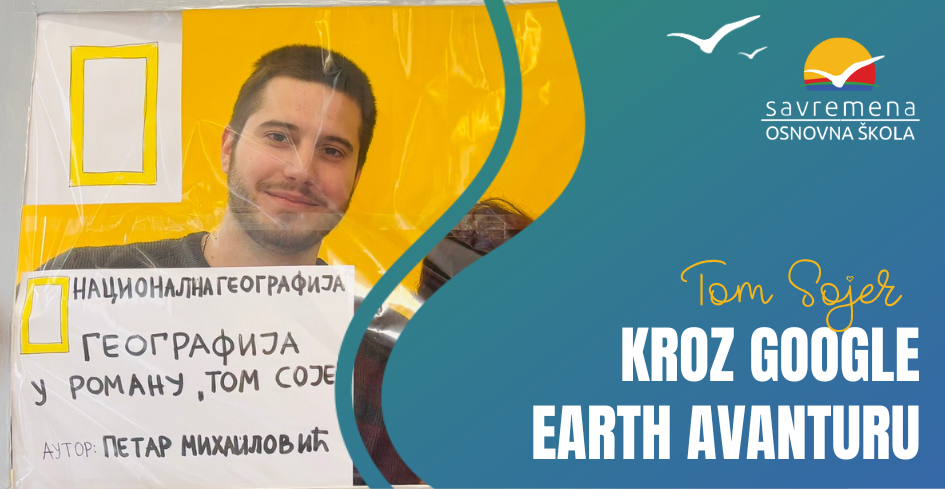
Tom Sawyer Through a Google Earth Adventure
Violeta Nincetovic / / Blog / November 24, 2025
Tom Sawyer Through a Google Earth Adventure
TV intro, acting, and a creative opening: a literature class like no other
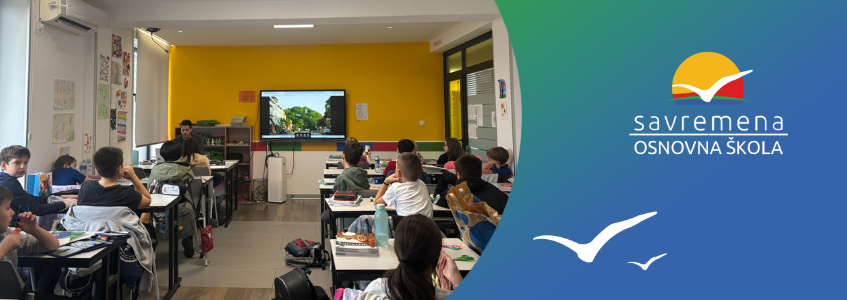
A virtual journey through Hannibal: when Google Earth connects literature with the real world
The second part of the lesson brought what students were eagerly waiting for — a virtual expedition using Google Earth.
Although the novel takes place in the fictional town of St. Petersburg, students learned that Twain found inspiration in a real place — his hometown of Hannibal in the state of Missouri.
That is where the true exploration began: students “walked” through the streets, riverbanks, and landmarks that still preserve the spirit of the 19th century, connecting real locations with the fictional scenes from the novel. They compared the appearance of caves, hills, fences, and river landscapes with the descriptions in the book and began to understand how closely space and story intertwine.
As satellite views, historical photographs, and modern images of Hannibal appeared on the screen, students asked questions, discussed the similarities and differences between past and present, and enjoyed discovering how literature and geography enrich one another.
The teachers encouraged them to think like researchers: What would Tom Sawyer look like growing up by the river today? What adventures might he experience in a modern environment? Why is the author’s hometown essential for understanding the atmosphere of the novel?
How environment shapes the story: analysis, connection, and deeper understanding
In the final part of the lesson, students explored how geographical setting, natural surroundings, and social context influence the behavior of characters and the development of the storyline.
This segment focused on connecting ideas, drawing conclusions, and understanding — not only the novel itself but the way environment shapes human experiences.
Working in groups, students discussed how the story would change if set in a different part of the world, why the Mississippi River is so important to the plot, and how the places in the novel reflect Twain’s personal memories.
The classroom was filled with creative energy: students sketched maps of key locations, added notes, and described environmental features. The teachers guided the discussion to ensure that every student understood the value of examining a text from multiple perspectives.
The interdisciplinary approach allowed students to experience the novel through the eyes of a geographer, traveler, researcher, and reader — all at once.
This method fosters creativity, critical thinking, and the ability to connect information, but above all, it awakens curiosity — the very curiosity Twain hoped to inspire.
The lesson remained memorable to students as a reminder that learning can be an adventure, that literature is more than an assignment, and that the best learning happens when subjects “speak the same language” and knowledge is lived, not just memorised.