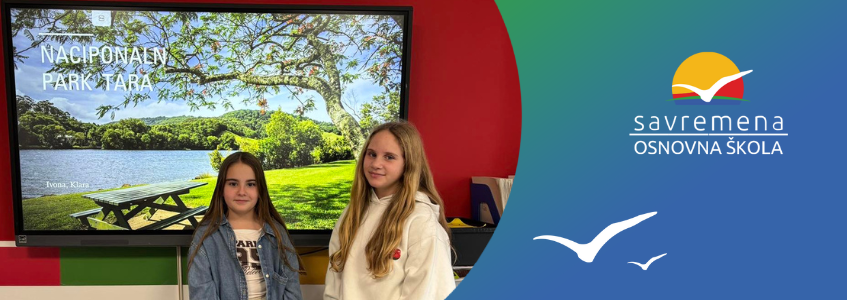
Each pair selected one national park and researched its natural features, plant and animal life, geographical location, as well as its importance for nature conservation and national identity. They then designed a clear, engaging and age-appropriate way to present their findings.
During these “student-led lessons”, it was evident how seriously they approached the teacher’s role:
- they explained the material clearly,
- asked questions to engage their peers,
- used images, maps and key concepts,
- paid attention to the structure and flow of their presentation.
For many students, this was their first time standing in front of the class with the task of teaching others, not just answering questions. That is why this lesson represented an important step in developing self-confidence, public speaking skills and a sense of responsibility.
A special focus was placed on the use of digital tools. Students independently created presentations, selected images, highlighted key information and learned how to use digital content as support — not as a replacement for explanation.
Through this process, they developed:
- digital literacy,
- the ability to select and evaluate information,
- didactic thinking (what is essential and what is less important),
- teamwork and cooperation in pairs.
Working in pairs further encouraged collaboration — students agreed on who would speak, who would explain, who would manage the presentation, and how to support one another during their delivery.
This lesson showed that children learn best when they are actively involved, when they have the opportunity to take on a role, make decisions and stand behind their knowledge. Taking on the role of teacher helped them see the content from a new perspective and understand how important it is not only to know — but to know how to explain.
The national parks project thus became much more than a curriculum topic: it turned into a practical exercise in responsibility, communication and modern skills that students need both in and beyond school.
At Savremena, we believe that this kind of approach — where knowledge is connected with real experience — is the foundation of quality education. And this week, our students showed that they are more than ready to rise to that challenge.