Before starting their artwork, the students explored who Salvador Dalí was and why his art looks so strikingly different. They learned that Dalí didn’t paint the world as it is — he painted the world as we feel it: thoughts, memories, emotions, dreams.
When they saw The Persistence of Memory, they noticed what generations before them had also seen — melting clocks, a dreamlike landscape, and a sense of silence and suspended time. Their questions began immediately:
– Why is the clock melting?
– Can time really stop?
– What is Dalí trying to tell us?
– Is this about memories that fade?
– Or is it a message that time rules us only if we let it?
The teacher guided them through a conversation about how art can express what cannot be seen — memories, feelings, and the shifting nature of time. It was the moment students began to understand the essence of surrealism: art doesn’t have to be “accurate”, but it always has to be true.
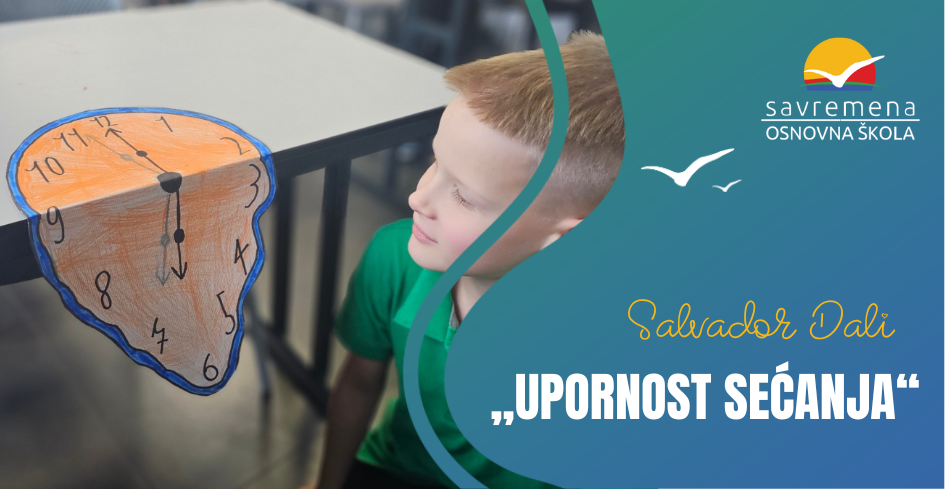
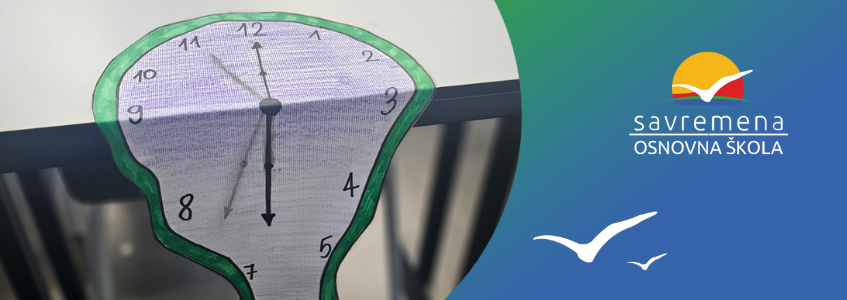
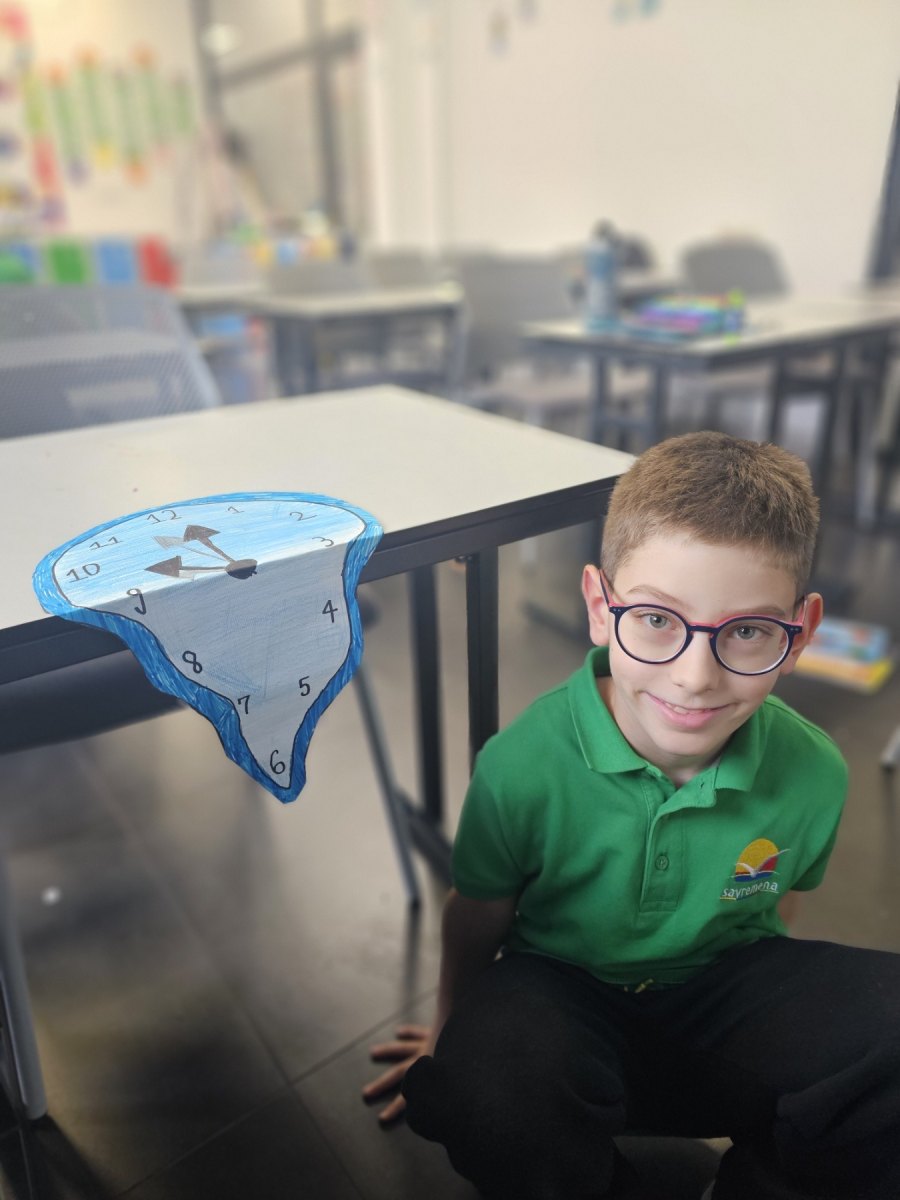
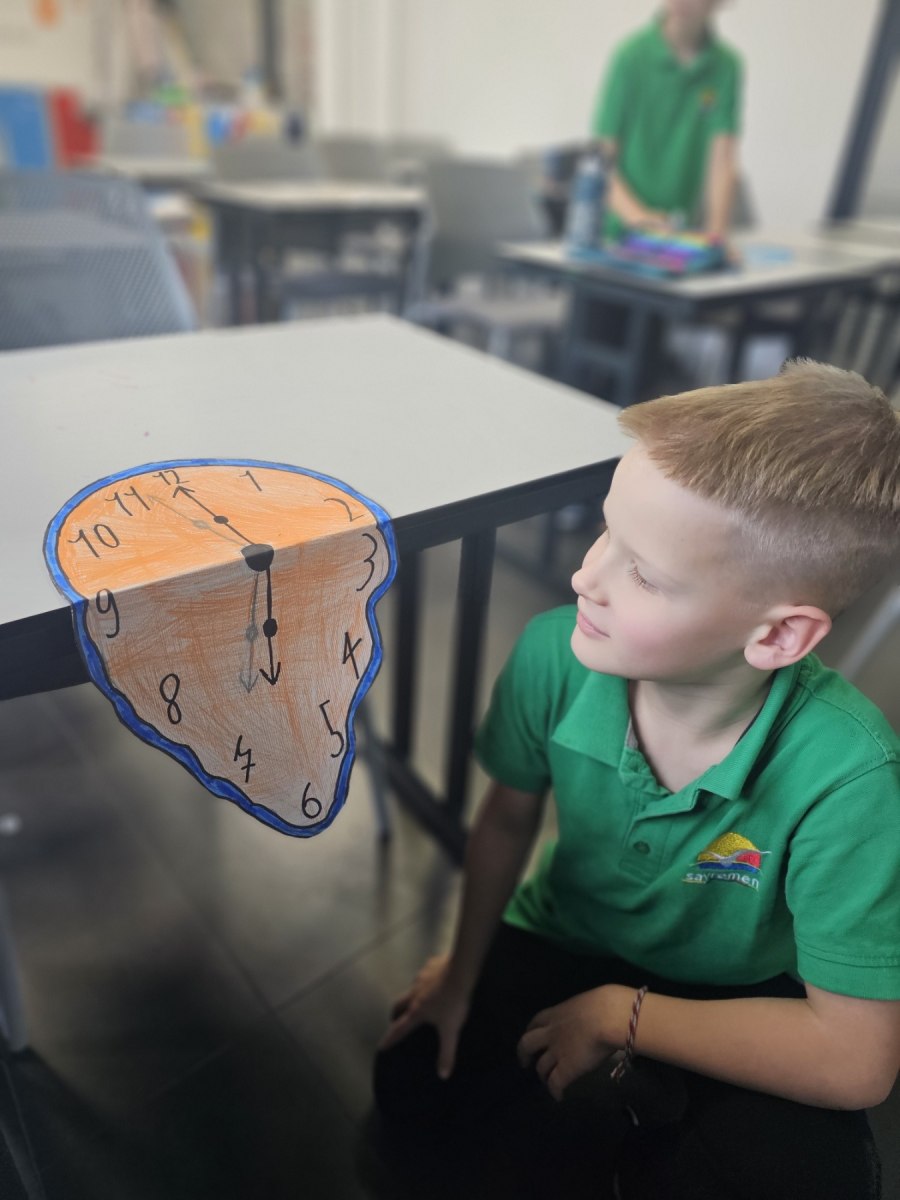
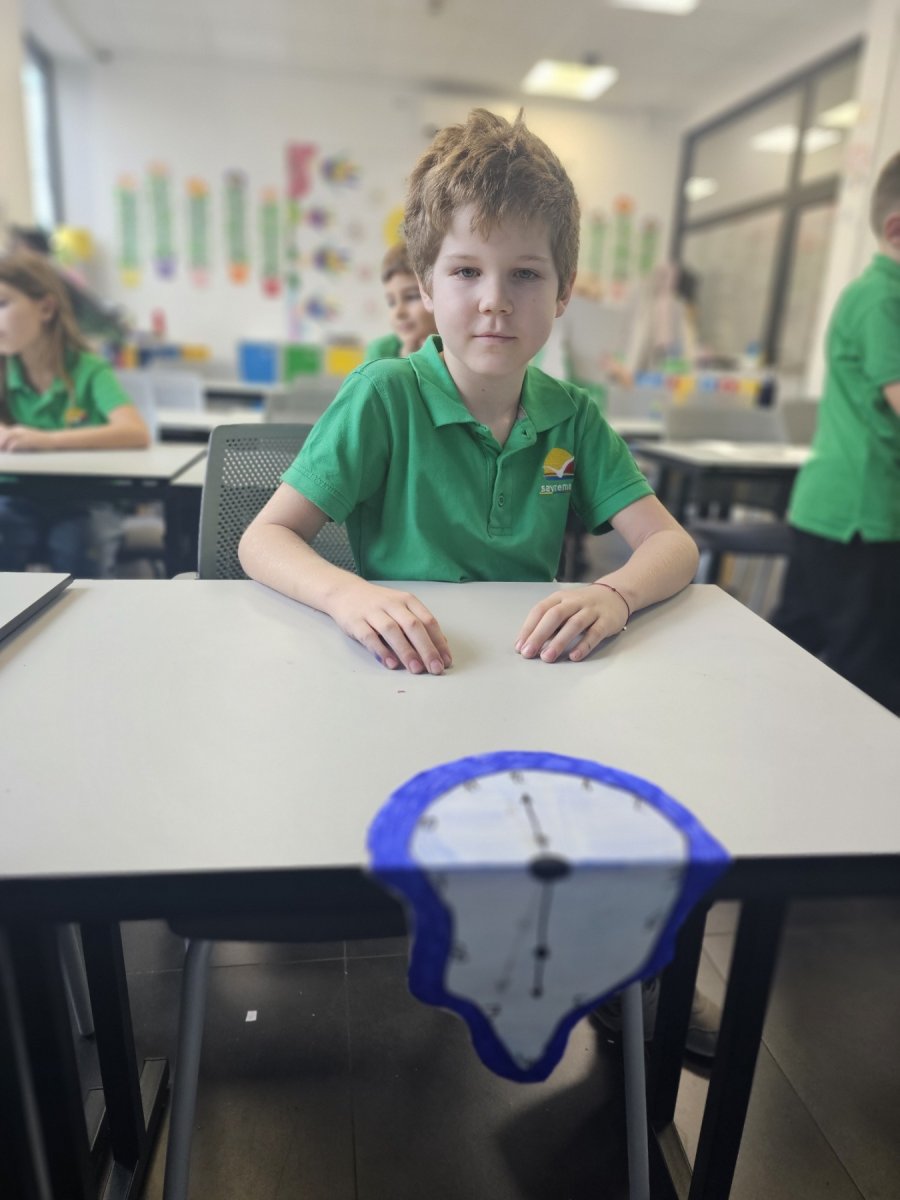
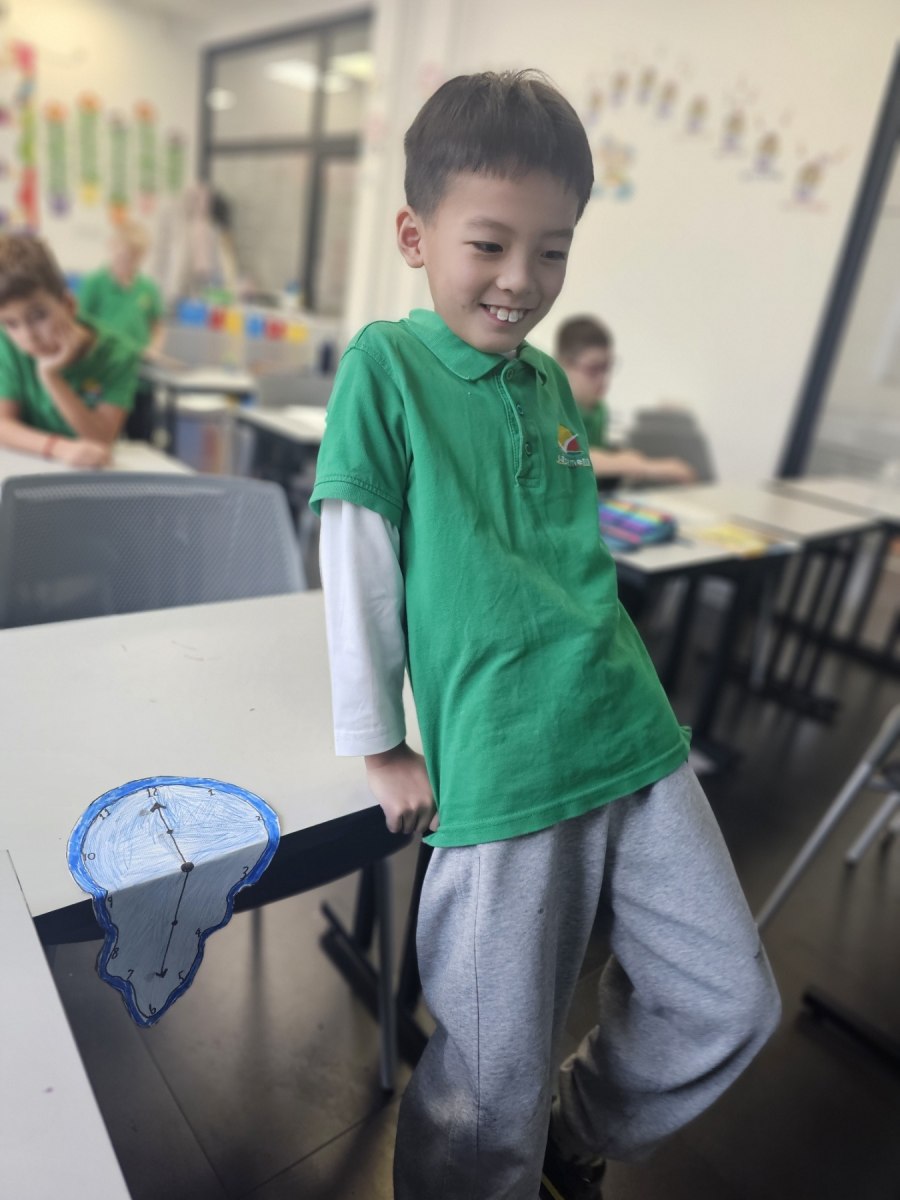
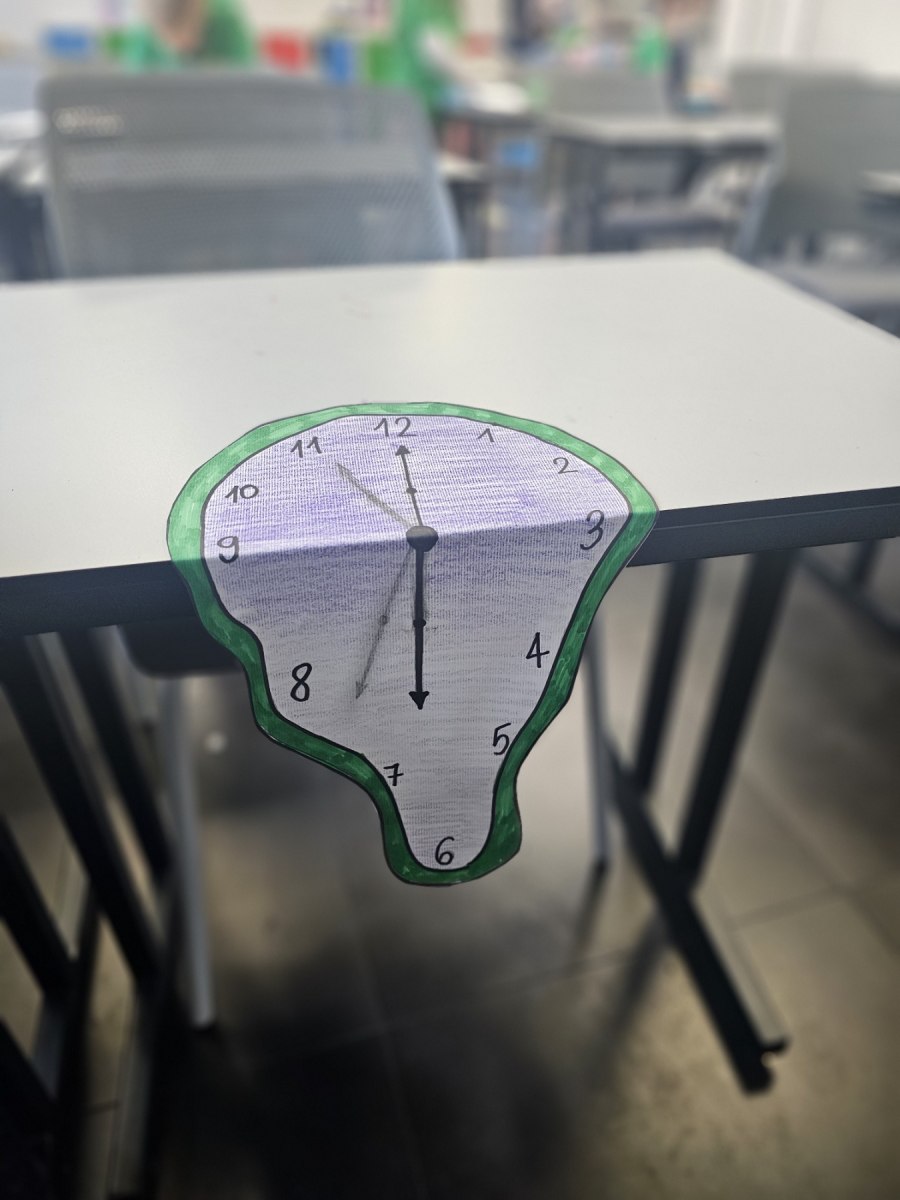
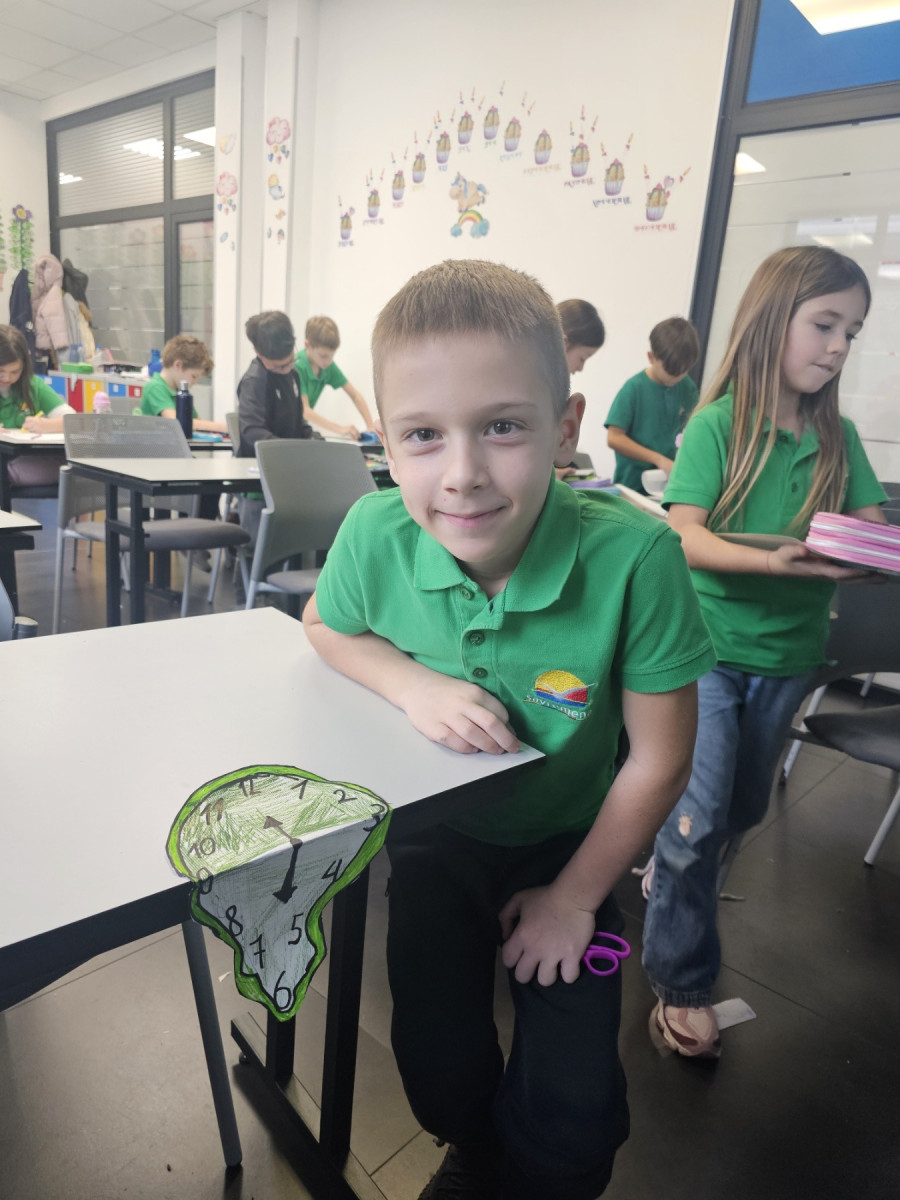
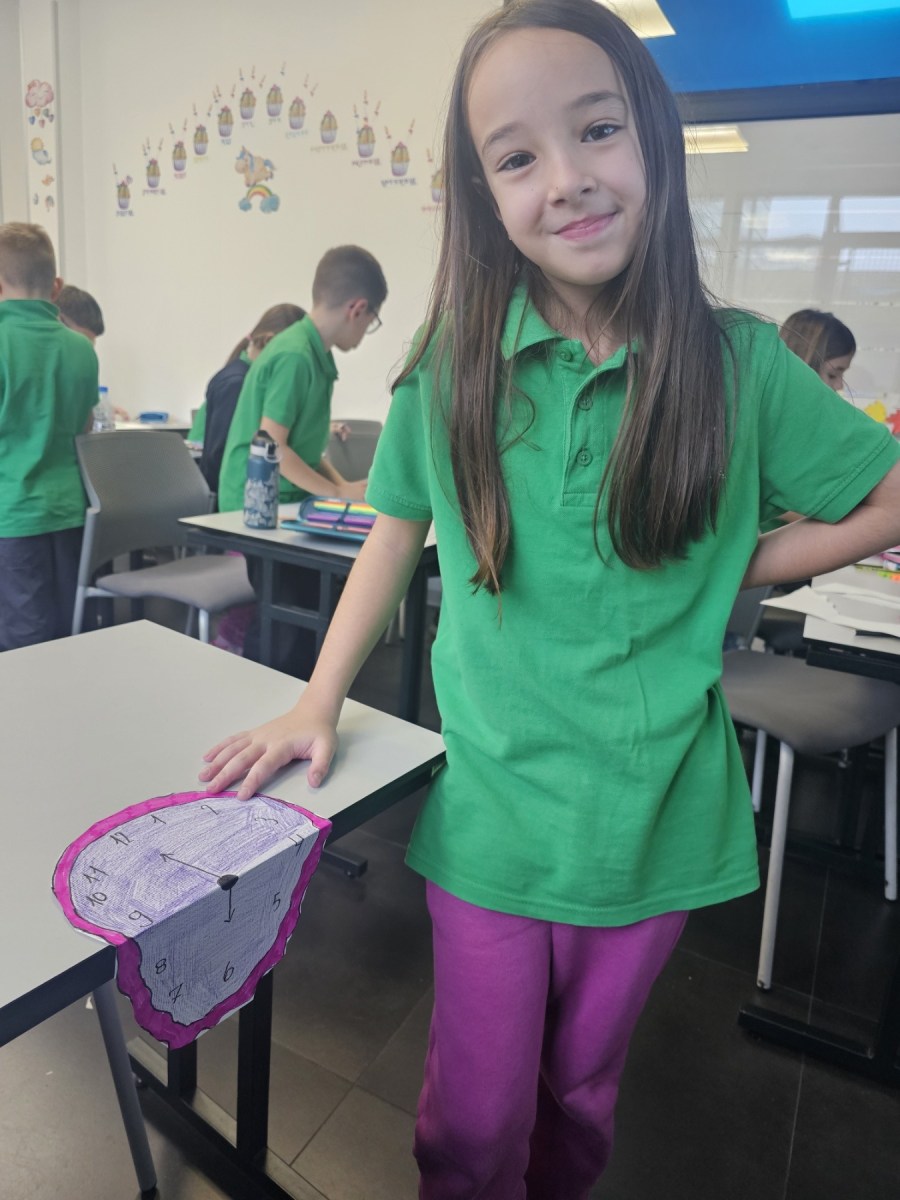
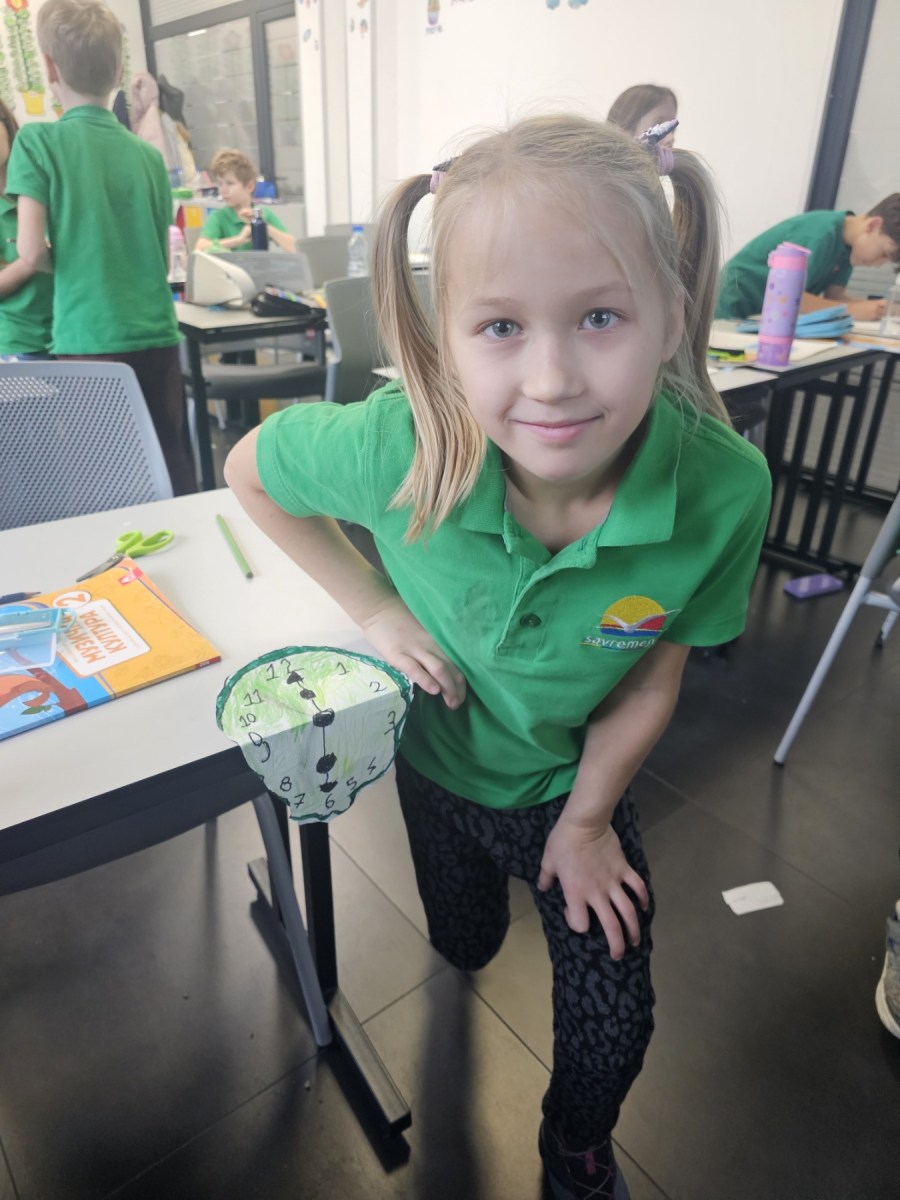
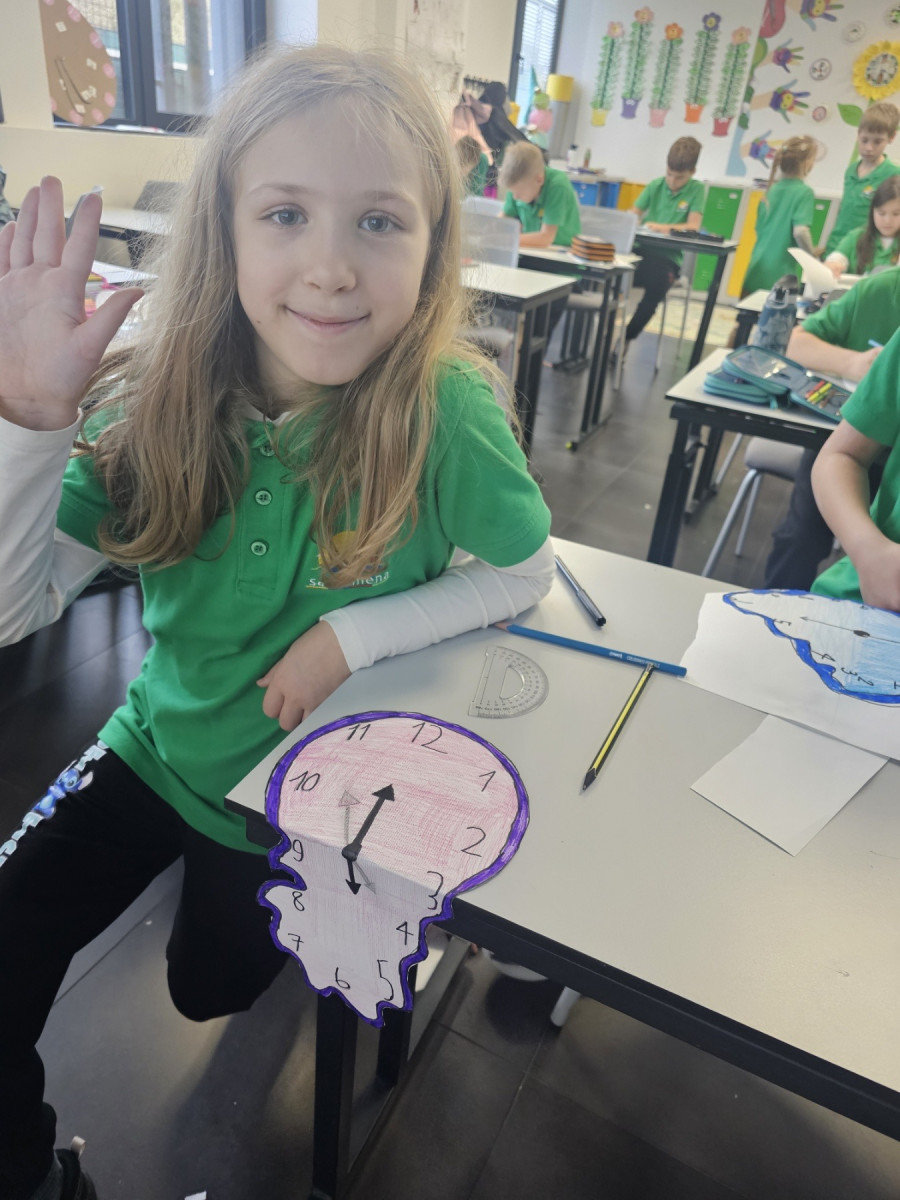
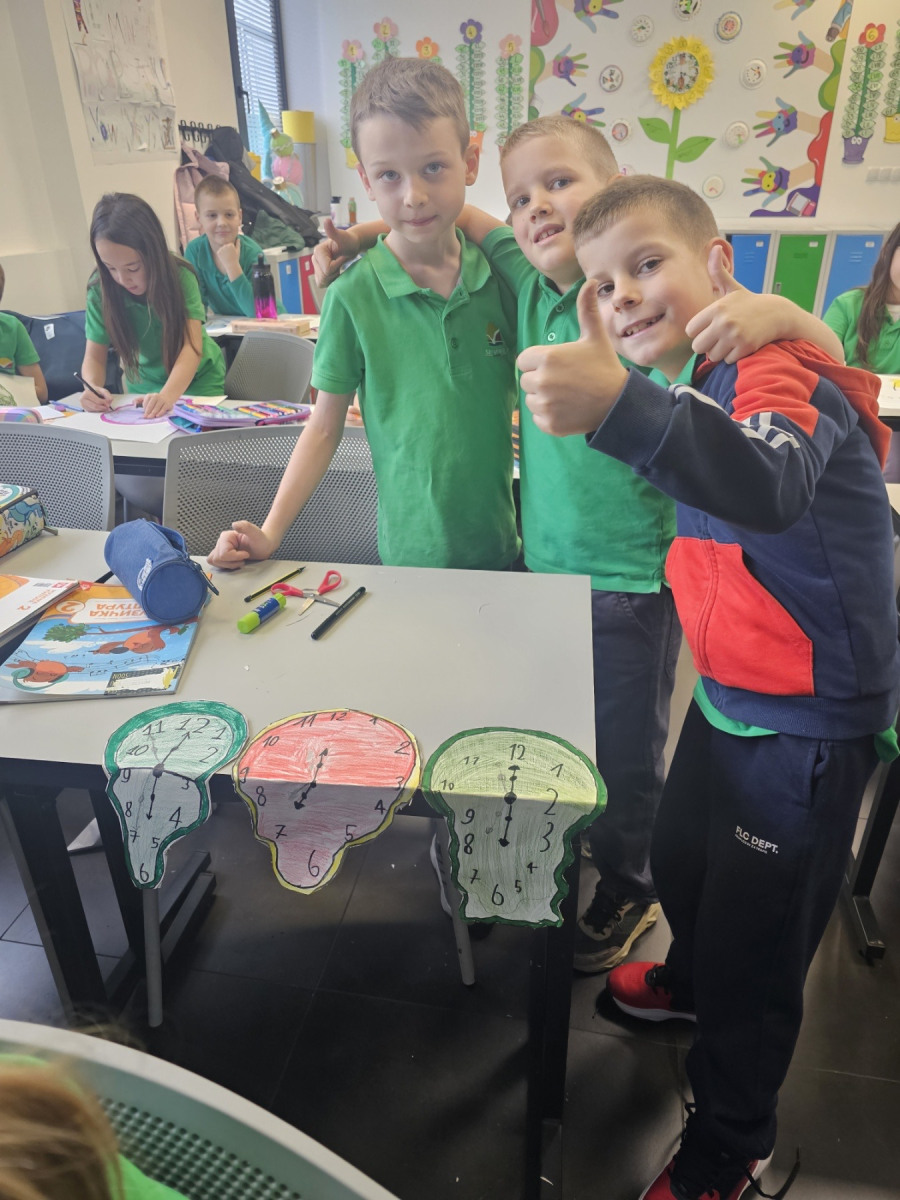
After learning about Dalí’s painting, students were asked to create their own clock — one that represents how they experience time.
The result? A classroom filled with artworks that could easily fit into a modern art gallery. Children placed their clocks so they hung over desk edges, just like in Dalí’s composition. This allowed them to think spatially — how a shape bends, how shadows change perception, and what happens when an object interacts with real space. Throughout the activity, comments that sounded like pure artistic insight filled the room:
✨ “My clock shows the time when I’m happiest.”
✨ “Mine is melting because I don’t like to rush.”
✨ “When I study maths, time goes slower — that’s why it bends!”
✨ “This pink one is my ‘going home’ time.”
Even in their humour, there was deep understanding — children naturally connected time with emotions, routines, moods, and the rhythm of their day.
This approach to art gives children far more than beautiful work to hang on school walls:
– They develop visual literacy: observing, interpreting, and recognising symbolism.
– Their fine motor skills and precision improve.
– They learn creative problem-solving without a single “correct answer.”
– They discover that art can be fun, unusual, and delightfully “strange.”
– They build confidence — every work, without exception, has value and authenticity.
Through Dalí, students were really learning about themselves — about how they experience time, how it shifts throughout the day, and how the world looks when they allow it to be a little more magical.
At Savremena, we nurture exactly that: the courage to think differently, to create something entirely new, and to know that imagination is just as important as any lesson in a book.