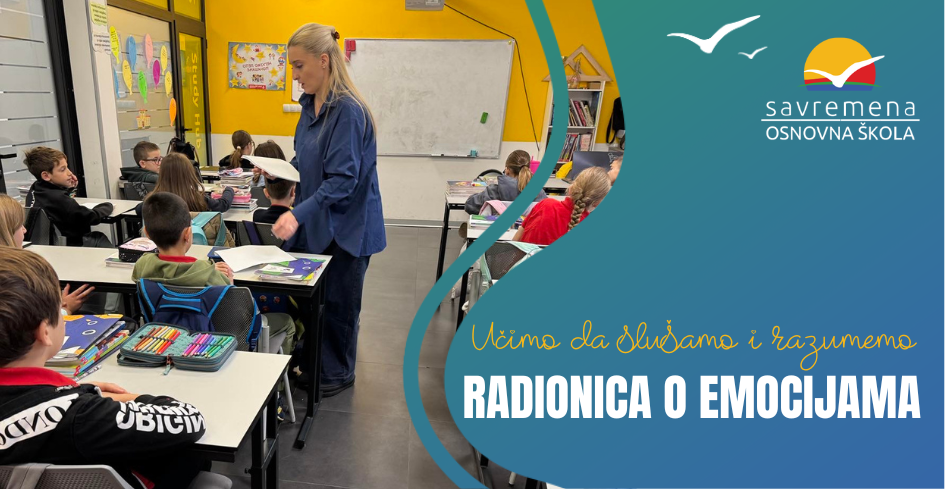
The introductory part of the workshop focused on individual expression and understanding non-verbal communication. Each student had the opportunity to share how they were feeling at that moment, while their classmates carefully observed facial expressions, posture, and body language. Special emphasis was placed on connecting what is said with what is seen—does the emotion we hear match the facial expression and physical signals we observe?
Through this activity, students learned how to listen to one another with greater attention, while also developing the ability to notice and interpret emotions in their peers. The discussion helped them understand that everyone experiences and expresses emotions differently, and that respecting these differences is an important part of healthy communication and relationships.
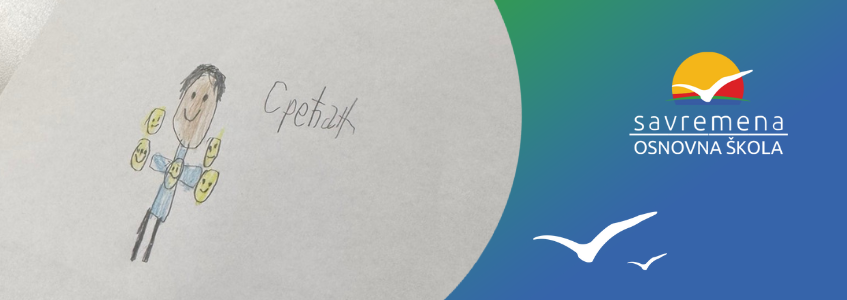
In the next part of the workshop, students explored emotions through creative expression. They were asked to draw one emotion they experience—where they feel it in their body, how they imagine it, and in which situations it most often appears. The drawings revealed the richness of children’s imagination, as well as their ability to recognise and visually represent their inner emotional states. Many of the artworks depicted not only emotions, but also everyday situations in which those feelings arise.
The final segment of the workshop involved role play, where students took turns acting as therapist and client, discussing a happy personal experience. By switching roles, they practised expressing their emotions clearly, listening carefully to others, and offering support. The shared conclusion of the workshop was clear and meaningful: talking about emotions is important, and understanding and support are the foundation of healthy relationships. Activities like these contribute to the development of emotional literacy, empathy, and self-confidence—values that play a crucial role in children’s long-term personal growth.