





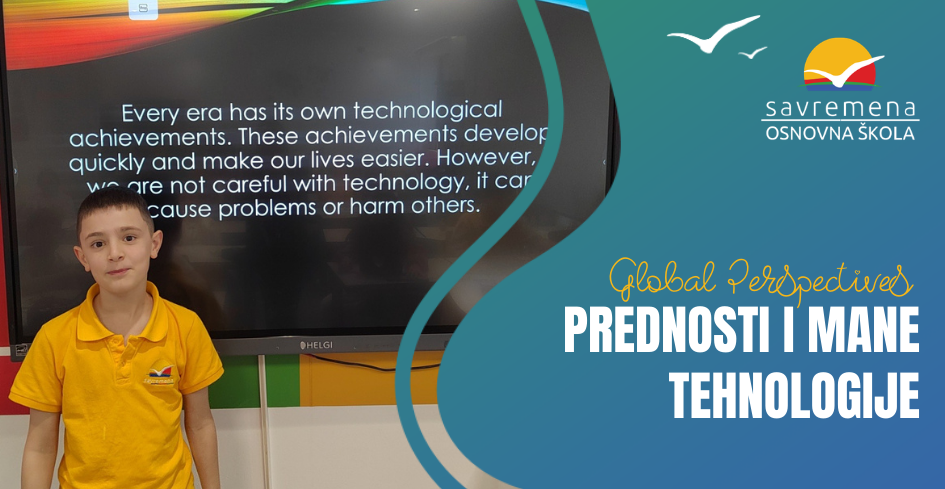
Global Perspectives – advantages and disadvantages of technology

/ / Blog / February 10, 2026

Global Perspectives - advantages and disadvantages of technology

Cambridge Global Perspectives

Technology is all around us – phones, computers, AI, the internet. We use it every day, often without thinking about how it works, where it comes from, or what impact it has on our lives. But students at Savremena Primary School were given the task to stop, think, and analyze – as part of the Cambridge Global Perspectives subject, they created projects and presentations on the topic “Computers and Technology”. The task was clear: compare technology now and in the past, explore the good and bad sides, and answer the question – why is technology important to us at all?

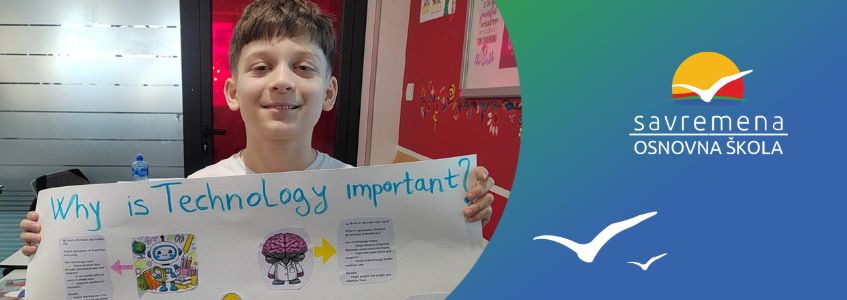
Students approached the task seriously. They researched, read, thought, and created. They made physical posters with illustrations and text, as well as digital presentations that they used to show their findings. Each student chose the angle from which they would observe the topic – some focused on the evolution of technology (from the first huge computers like ENIAC to compact devices with artificial intelligence), others on the advantages and disadvantages that technology brings, and still others on the reasons why technology has become inseparable from our lives.
Good Sides, Bad Sides – A Balanced Perspective

On the posters and presentations, clearly divided arguments could be seen. On one side – the good sides of technology. Students listed how technology helps with learning, enables quick communication with friends and family, makes it easier to find information on the internet, helps doctors with diagnostics, and enables online shopping. There was also awareness of how technology helps people with disabilities, how renewable energy sources use technology for a cleaner planet, and how education becomes more accessible through VR and digital platforms.

But students didn’t forget the other side of the coin either – the bad sides of technology. They talked about screen addiction, about how children spend too much time on phones instead of outside with friends, how technology can have a bad effect on eyesight, and how there are online dangers such as misuse of personal data and identity theft. They discussed how technology can create a feeling of isolation, how excessive screen use affects physical health. And most importantly – they concluded that technology itself is neither good nor bad, but depends on how we use it.

Presentations That Teach Critical Thinking

After the projects were completed, students presented them to their classmates. They stood in front of their peers, held up posters, showed digital presentations, and explained their conclusions. They talked about what they learned, which data surprised them, and where they found information. They discussed how to use technology wisely – because, as they themselves wrote on one of the posters: “Technology is good WHEN we don’t overuse it.”

This wasn’t just a task where you make a poster and hand it to the teacher. This was a process – research, thinking, forming one’s own position, presenting arguments, listening to other perspectives. And that’s exactly what Cambridge Global Perspectives provides – a space for students to become critical thinkers, to learn how to analyze problems from multiple angles, how not to accept information at face value, but to ask questions and seek answers. Because in a world where technology is rapidly advancing, what’s more important than knowing how something works is understanding why we use it and what consequences it has


Viber WhatsApp