

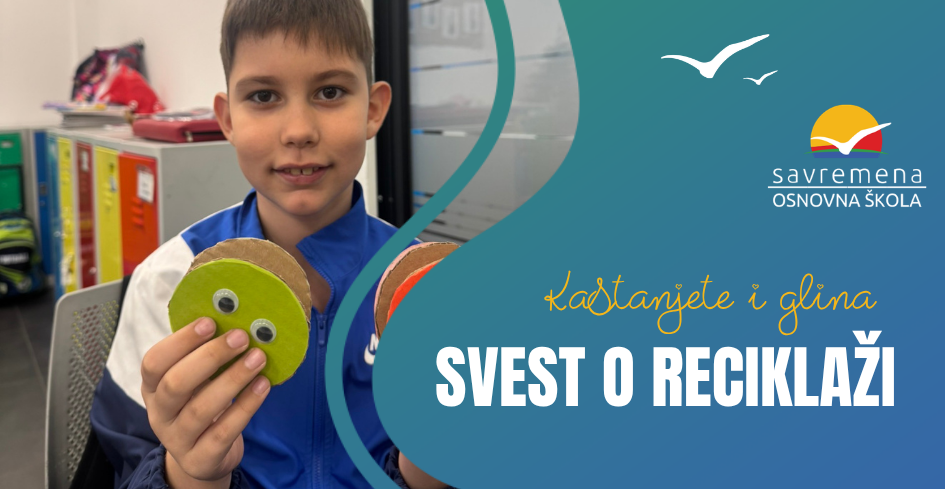
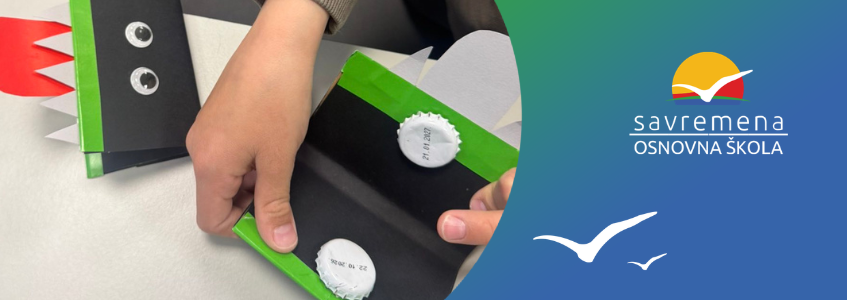
Music class in first grade began with tables full of unusual materials — cardboard boxes, plastic bottle caps, colored paper, wooden sticks, tape, and imagination. The task was straightforward: make your own instrument. The students of class I-2 took on the challenge seriously and creatively — each one approached the materials in their own way, choosing colors, shapes, and combinations that felt right for them. Someone made castanets from two pieces of cardboard and bottle caps that clicked perfectly when struck together. Someone painted wooden blocks green and orange and proudly held them up in the air. Someone assembled small metal bells and colorful elastic bands into an instrument that sounded like the real thing. The process of making was not just technical — it was personal. A child who chooses a color, decides how many caps to attach, tests the sound, and changes the plan if unsatisfied, goes through an entire series of decisions that seem small but are actually a significant step in building confidence and creative thinking. What emerged was not a uniform collection of identical objects — it was a collection of personal, different, original solutions. And every single one made a sound.
Castanets and Clay – Rhythm and Recycling
Violeta Nincetovic / / Blog / March 30, 2026
Rhythm and Recycling
Castanets and Clay
Spain in the classroom
Once the castanets were finished, the class took a new direction. With the sound of instruments they had made themselves, the students traveled — symbolically, but very really — to Spain. They discovered flamenco, one of the most recognizable dance and music traditions in the world, and immediately tried to catch its rhythm. The teacher led rhythmic games in which students used their castanets or sticks to follow a given pattern, while the rest of the class listened and responded. The rhythm passed from one child to another, shifted, sped up, repeated, and each time someone found the right beat, something like collective satisfaction filled the room. In those moments, the classroom was not just a learning space — it was a stage. And the children were not just students — they were musicians playing their own instruments and performers feeling the rhythm with their bodies, not just their minds. Flamenco did not remain a geographical or cultural fact in a notebook. It became an experience remembered differently from anything read or copied down.
Spring waltz and feeling figures
At the end of class, the atmosphere shifted — quietly, almost imperceptibly. The castanets were set aside, and clay appeared on the tables. To the sounds of the Spring Waltz, the same hands that had been keeping rhythm began to gently press and shape. The task was to make a feeling figure — something that represents what a child carries inside, what they feel, what they think. Someone made a bird with open wings. Someone made a small figure standing upright. Someone made a simple, round form that looked like peace itself. Every figure was different, just as every student is different — in temperament, in the way they experience the world, in what brings them joy or calm. This class was not just about music, nor just about art — it was about how a child can move through several forms of expression in a single school period and take something authentically their own from each one. From recycled material to instrument. From instrument to rhythm and flamenco. From rhythm to silence, clay, and the inner world. It was not just a class. It was a journey that every child made in their own completely unique way.